Travel Diaries: Exploring Some of Negombo’s Churches
If you were to close your eyes and picture a sanctuary, what would come to mind? Would it be the comfort of your home, hidden from the stares of passersby? The nearest park, where you’re free to watch the squirrels scamper away while the cool breeze caresses your cheeks? A cemetery, where the sounds of silence are accompanied by the rustling leaves? Or perhaps your sanctuary lies in the loving embrace of someone who accepts you with open arms.
And if you’re a practicing Catholic, that sanctuary might be the nearest church.
In a practice that I jokingly refer to as “church-hopping,” my parents and I stop by several churches on our way to and back from Negombo, aptly named Little Rome for the vast number of Catholic churches in the area. Statues of the saints adorn most streets, and during feasts, Catholics participate in processions while churches erect quasi-maypoles with flags for the faithful to write their intentions.
Much like Buddhism and Hinduism, Catholicism, too, is an important part of Sri Lanka’s heritage. Bearing this in mind, I decided to cover three Catholic churches in and around Negombo that are certainly worth a visit during your travels.
Kurusa Palliya / Holy Cross National Shrine – Marawila
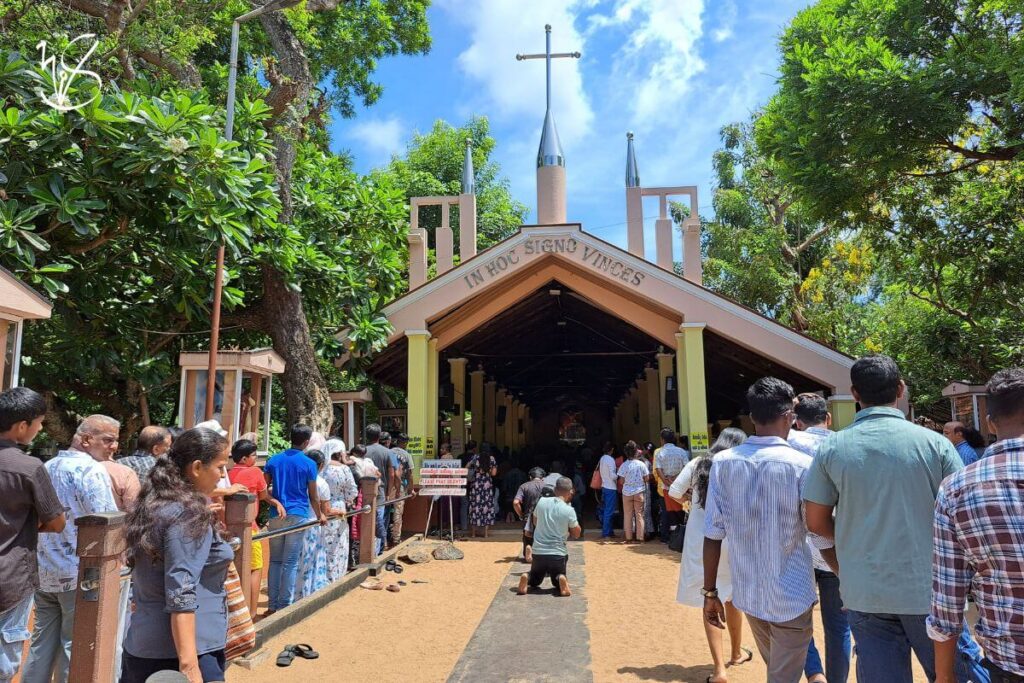
Only a stone’s throw from the sea lies the Kurusa Palliya—a humble shrine built atop sand, devoid of grandeur yet imbued with the hope of the faithful.
One of the most distinct features of the Kurusu Palliya is its cement path, upon which many practice “kneel-walking” to the communion rail while reciting the rosary or praying to themselves. It’s no easy feat—the start of the path burns under the blazing glare of the sun, and grit is sometimes strewn over the path when people walk on the surrounding sand, sometimes sharp enough to bruise and tear skin. But the dull ache in your knees is hardly on your mind as you press the rosary beads close to your heart and recall the Passion of Christ.
As these devotees seek penance, others form queues that lead to the shrine’s central statue of the crucified Christ. By the time you reach the statue, the beads of your sweat on your forehead become nothing more than a distant memory, for the Son of Man gazes down at His followers in indescribable pain, yet the look in His eyes is ever so kind.
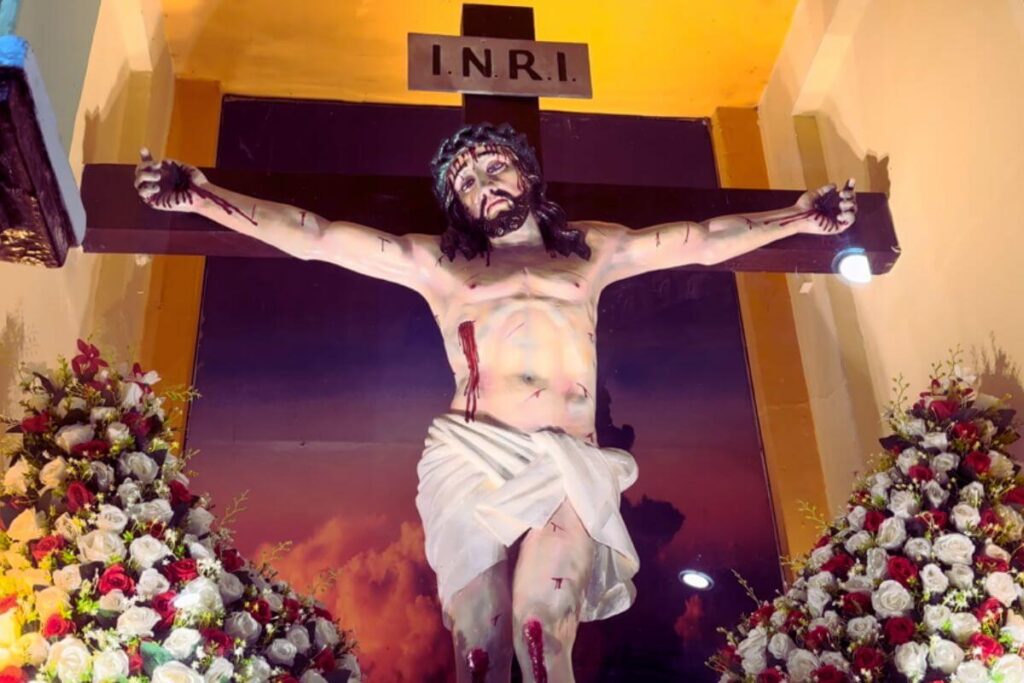
Originally, this statue was ordered from Bangalore, but it arrived in pieces. After claiming the insurance money, the parish priest at the time, Fr. Ferdinand Thiri, glued the statue with a special plaster imported from Germany in the early 1900s.
Of course, the Kurusa Palliya is no vision of grandeur—the church itself is so small, devoid of expensive decor; and the thought of queuing with others may not appeal to those who prefer easy convenience, but this humility always leaves a lasting impression on me, because it’s a testament to the faith of those who endure the pain of “kneel-walking” as though it’s nothing. And their steadfast belief is rewarded, because even the most earnest yet impossible desire can become a reality in the form of a miracle.
The miracles of the Kurusa Palliya are not the garish, pompous displays of money and jewels falling from the ceiling of an air-conditioned church frequented by the affluent. These aren’t sensationalized “miracles” of phones charging on command, money being deposited into bank accounts, and tame demons being cast out and televised for all to behold the might of the prophets.
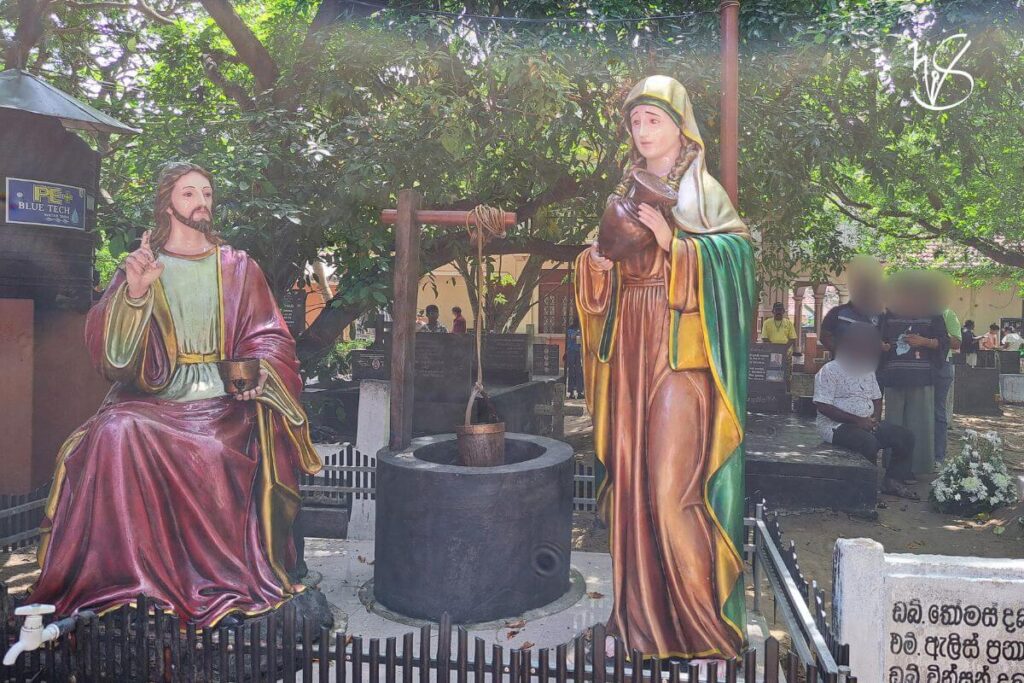
At a time when the children of the region were afflicted with a skin disease, a mother had prayed fervently and washed the feet of Jesus with water, and she’d carried some of this water back home for her child. It was through her faith that her child was healed when the water came into contact with the rash, and this drew the afflicted to the church.
It has since become a practice for Catholics and even others from all walks of life to visit the church and pray for miracles. No matter how small or insignificant you think your deepest desire may be, you can purchase a few votive candles from the bookshop, light them in the designated corner of the surrounding graveyard and pray for a miracle. After all, there is no discrimination here, and all that is good for you can happen—as long as you believe.
St Jude’s Church – Kurulukele
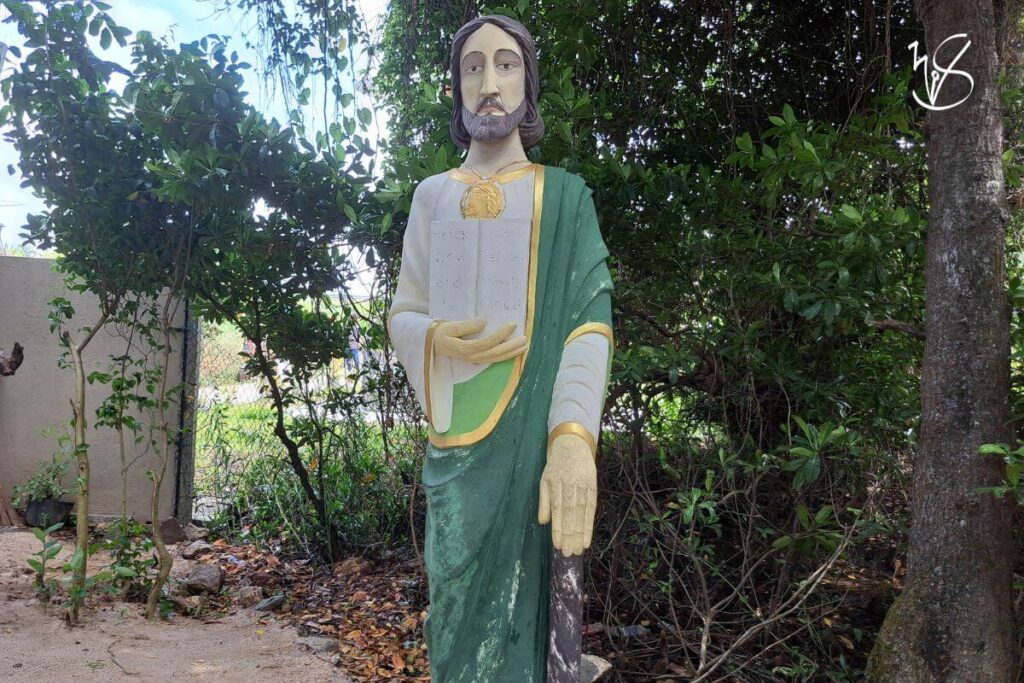
The road less travelled leads to Seeduwa, where the Kurulekele Church promises salvation to the worn and weary by the Negombo Lagoon. In this tranquil spot, time stands still, and only birdsong accompanies the hush of the wind and the steady plop, plop, plop of the waters lapping at the shore.
Statues adorn every nook and cranny of these church grounds; as you walk past the entrance, you’ll find several statues of Christ and St. Jude, as well as my favorite—a replica of The Pietà, in which the Virgin Mary cradles the body of her son and mourns His mortal death.
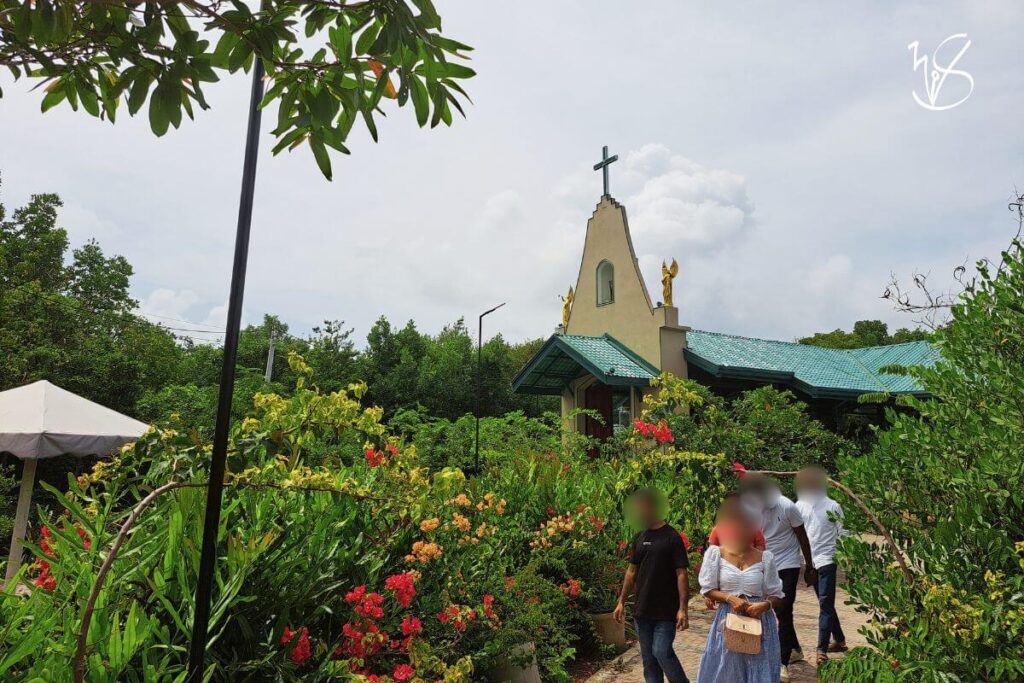
The grounds split into several sections, but the main path leads to the Church, painted in cream and green, blending seamlessly with the backdrop of trees. Walk inside and you’ll find a sanctuary built of wood and a nave of wooden and plastic chairs. Though the church lacks kneelers, the faithful readily kneel on the floor without uttering a word of complaint.
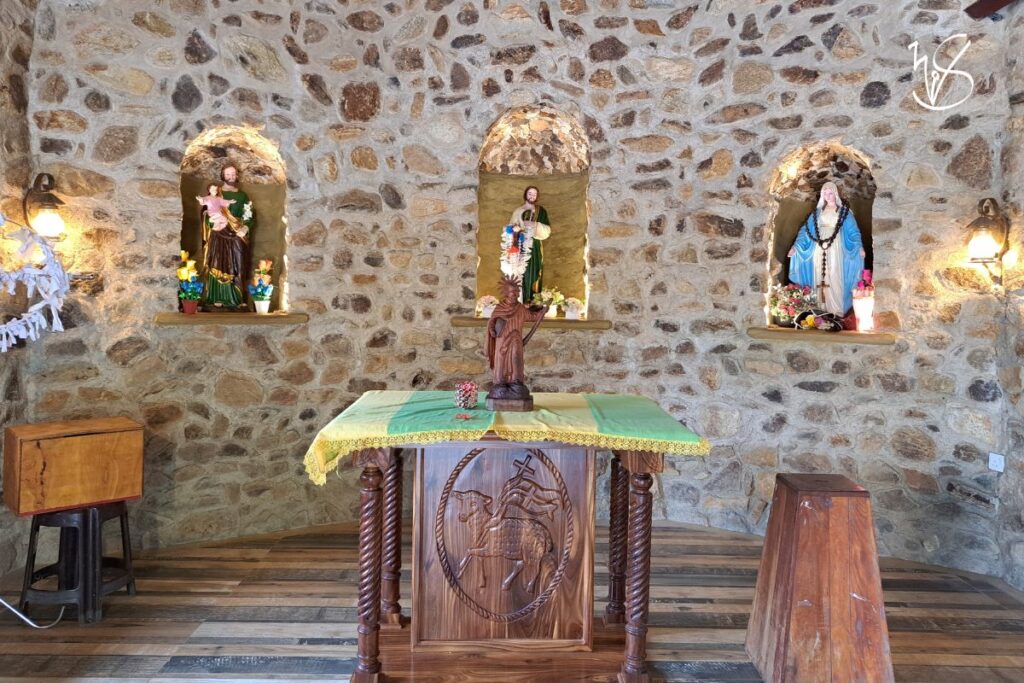
Beside the church, you will see a little stone chapel containing statues of Jesus Christ, Mother Mary, and St. Jude, and if you so desire, you may spend a few minutes in adoration or silent prayer and leave a donation in the mite box.
Should you exit and turn to the far left, you will find yourself on a cobblestone path that leads to tents, where statues of the saints are sheltered from the rain, along with gazebo-like complexes amid blossoming flowers, where the devout sit and quietly ask the saints to intercede for them—all while listening to the plop, plop, plop of the lagoon nearby.
It’s worth noting that this beautiful church began as a humble hut, and the main building you see today was completed in 2025. But although the Kurulukele Church boasts no grand history, it provides shelter and respite before one returns to the trials and tribulations of their daily life.
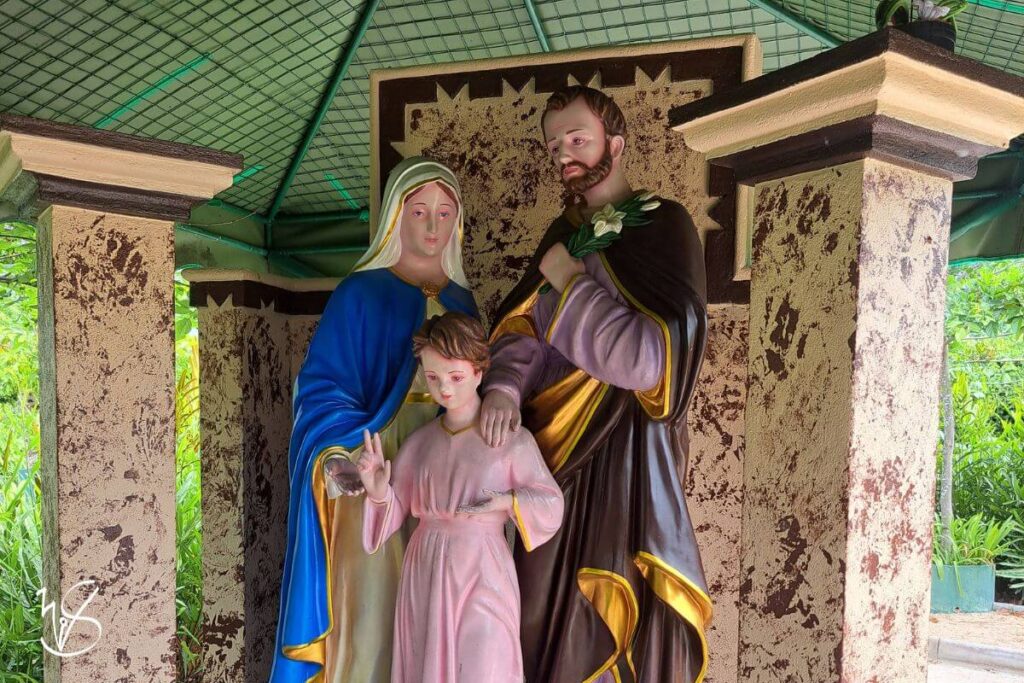
Tip: The church grounds are crowded on Sundays and whenever services are underway, so consider visiting after 12.00PM for an opportunity to sit and pray without interruptions. Since the heat is quite high by then, it’s best to bring an umbrella or a hat.
St Sebastian’s Church – Katuwapitiya
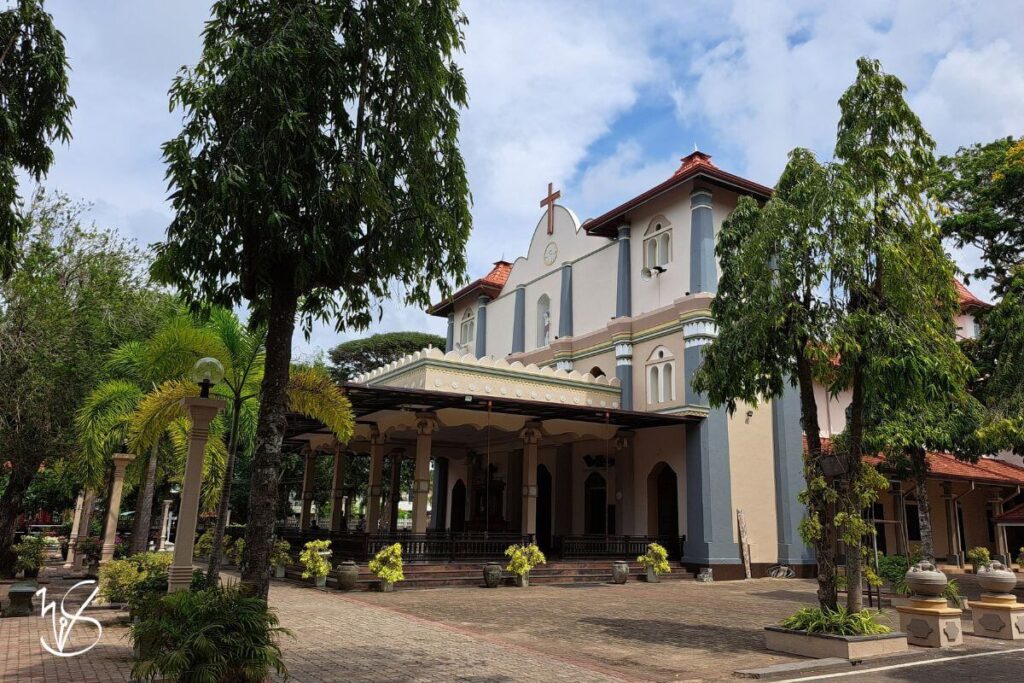
An uncharacteristic stillness lingers in the air around St. Sebastian’s Church in Katuwapitiya, where the silence is deafening when Mass is not underway, for although many years have passed them by, the tight-knit community of Catholics have vowed to never forget the lives that were lost in the Easter Sunday terror attacks.
On the 21st of April, 2019, the faithful gathered at the Katuwapitiya Shrine to celebrate the resurrection of Jesus Christ, but men, women, and children alike lost their lives when a bomb was detonated on the church grounds. 117 souls suffered an untimely demise, and proof of their sacrifice is etched on the massive monument located to the left of the complex, where a statue of the resurrected Christ is displayed.
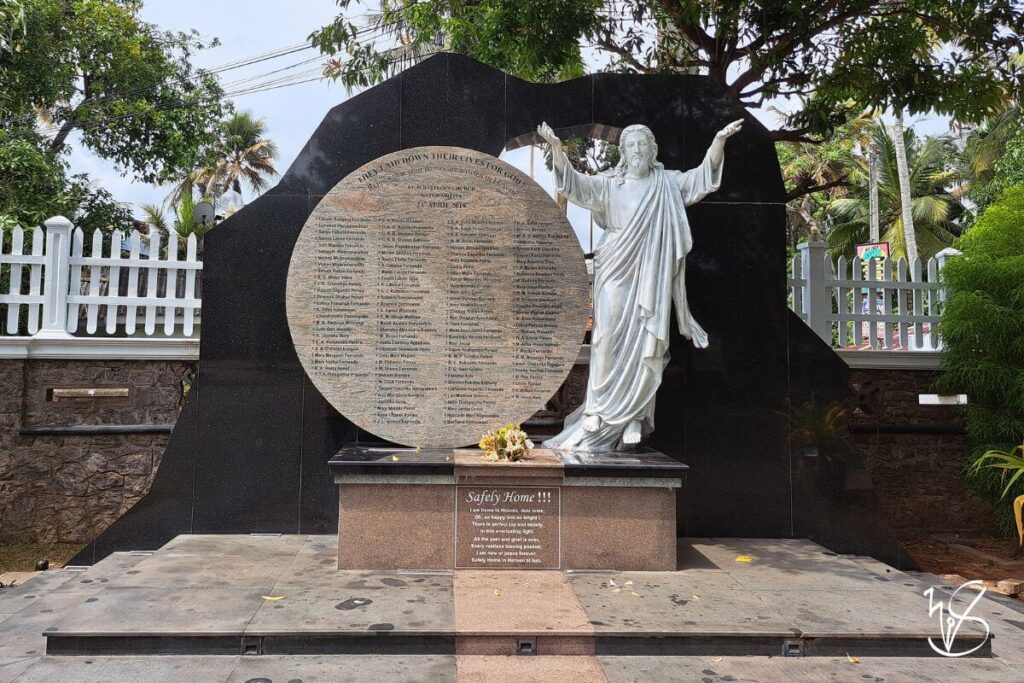
It would be crass to say that the church has been restored to its former glory—buildings can be rebuilt, but lives once lost cannot be regained. Though normalcy has returned to the Katuwapitiya Shrine, those left behind can never forget the loss of their loved ones—which is why I ask that you light a candle or offer a prayer for the departed and the living, too, as they await answers for the truth behind that tragedy.
When one heads inside, they may find stained glass windows, murals depicting the life of Christ, and an ornate altar that is visible from all sides where the devout congregate during each service.
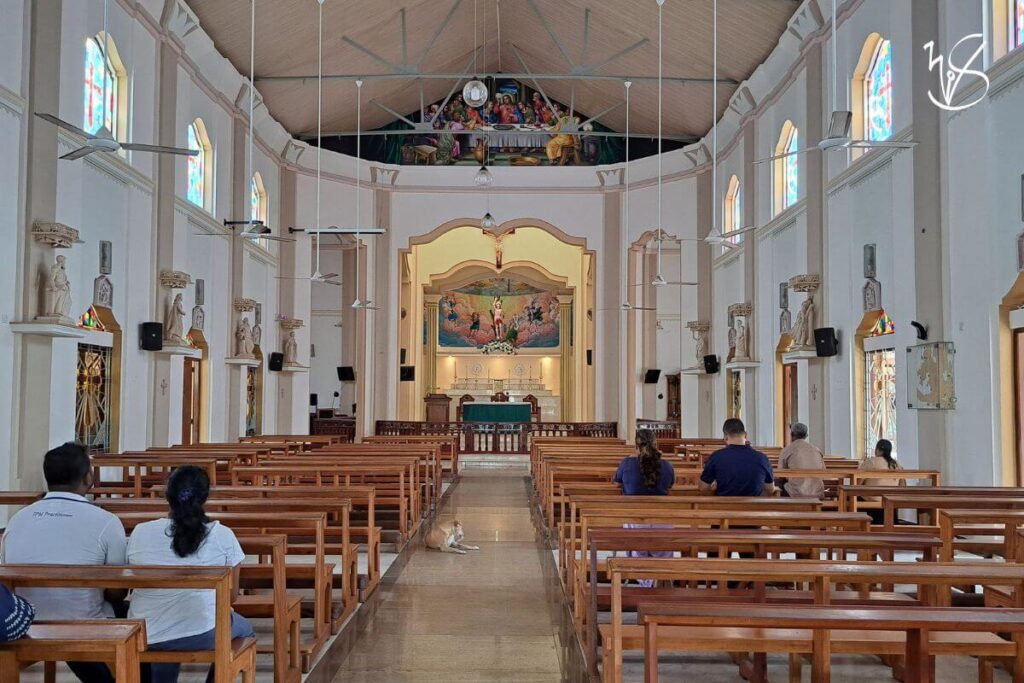
Although the church is beautifully renovated, certain parts are preserved as a reminder to visitors—a part of a wall and a tiled floor are damaged with shrapnel from the blast, and a bloodied statue of Christ is carefully maintained in a glass cabinet.
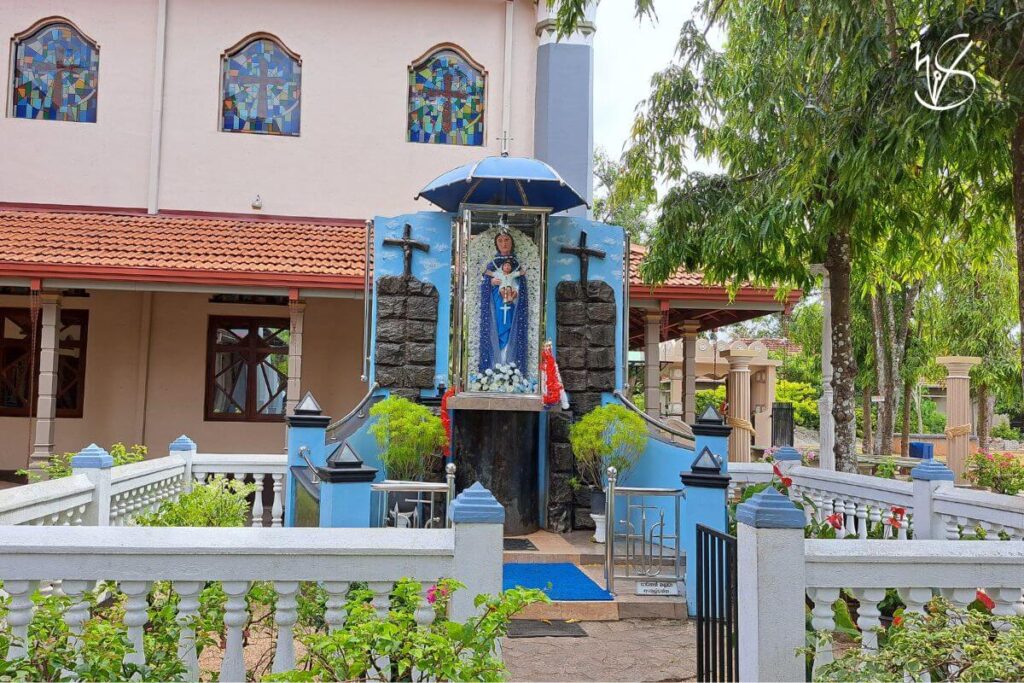
But various other structures adorn the grounds, like a Lourdes grotto dedicated to the Virgin Mary, shrines for the saints, and a particularly prominent shrine for St. Sebastian, where many have tied coins with strips of white cloth. This is known as a baare—a pledge to the saints to pray on your behalf, indicating your resolve to fulfill a promise once your request has been answered by God.
Final Thoughts
Given Little Rome‘s reputation, these aren’t the only churches in the vicinity that are worth visiting, and there are plenty of others that have yet to be explored. In fact, if I were to list all of the Catholic Churches in Negombo and their respective histories, we’d be here for quite a long time—and I wouldn’t even know how or where to start.
But if there’s one piece of advice I have to offer, it’s this: take the road less travelled, and stop by the churches that catch your eye during your travels. They might not be as grand as the ones you are used to, but even the most humble shrines are imbued with serenity. And well, who knows? One of them may become your sanctuary.


You May Also Like